

Awin has been around for a long time, and for some, it still works.
But if you’ve spent real time on the platform, you’ve likely run into the same issues others have faced.
Payments can take a while. With twice-a-month payouts and Net 45 terms, you could be waiting weeks to get paid. Then there’s the “approved but uncleared” status, where commissions just sit inside the platform with no clear timeline.
That’s frustrating. But trying to fix it can cause even more headaches. Users often talk about slow support and little to no explanation for issues like closed accounts. When your income depends on reliable payouts, that kind of uncertainty isn’t something you can build a business on.
Years ago, when affiliate marketing was still finding its footing, that’s just how things were. Today, there’s no excuse.
Modern affiliates expect clear data and fast payouts. Vendors expect smooth onboarding and support that actually helps them connect with the right partners. And now, there are platforms built to deliver exactly that.
If Awin isn’t cutting it, you have better options. Let’s look at the best Awin alternatives to consider in 2026.
Quick Overview: 8 Awin Alternatives
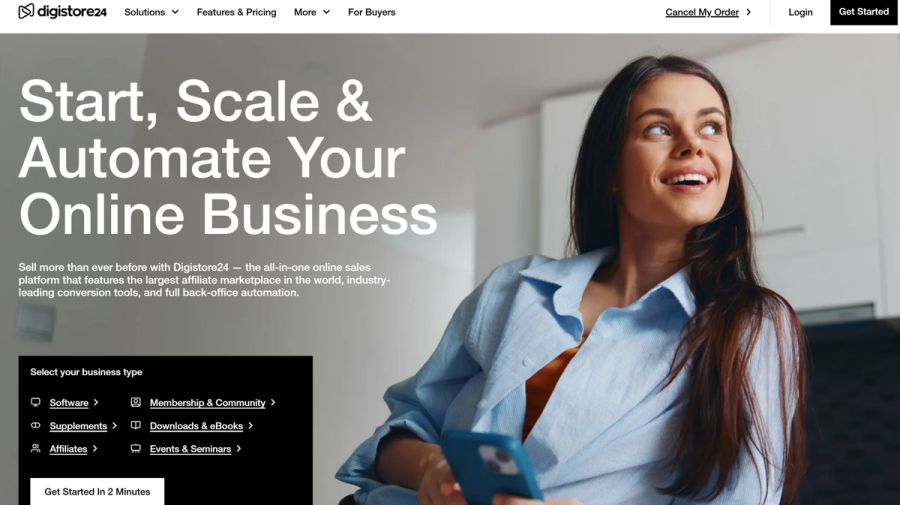
Digistore24
Launched in 2012 in Hildesheim, Germany, Digistore24 was built to help affiliates and vendors sell across borders without getting buried in payment and tax compliance headaches. Instead of pushing that burden onto users, the platform handles it from the start.
Today, it’s one of Europe’s largest affiliate marketplaces, with 8,500+ vetted offers and a global base of active affiliates. Digistore24 is especially strong in digital products (such as courses, software, coaching, etc.) but it also has a strong catalog of health supplements. It’s known for high commissions, fast payouts, and an easy-to-use interface.
Digistore24 also has a strong presence in the United States and the UK, with offices in multiple countries to support operations in those regions. What really sets it apart is its unique approach to the Merchant of Record (MoR) model. Unlike Awin, Digistore24 processes the sale, handles VAT, manages invoicing, and takes on the compliance risk. For vendors, that removes a major operational load. For affiliates, it creates a more consistent buying experience across the offers they promote.
Getting started is simple. Affiliates can sign up in minutes and access the marketplace right away, while vendors go through a short review (usually completed within 48 hours) to ensure product quality and compliance.
But Digistore24 pulls far ahead with its built-in conversion tools. Vendors get a customizable cart builder, one-click and cross upsells, and real-time split testing through the Conversion Cockpit. With a 180-day cookie window and default server-to-server tracking, Digistore24 also helps affiliates get more reliable attribution.
All of this is backed by Digistore24’s support team, which offers white-glove onboarding for both affiliates and vendors. After you sign up, a team member typically reaches out quickly to share resources, answer questions, and help you get started.
- Price (vendors): Free to join; ~7.9% + $1 per sale
- Commission rates: Typically 15–90%; some offers up to 100%
- Payout speed: Up to 4x per month (weekly cycle)
- Minimum threshold: $50 (first payout), then $200
- Cookie window: 180 days + Default S2S tracking
- Refund window: Vendor-controlled (usually 14–180 days)
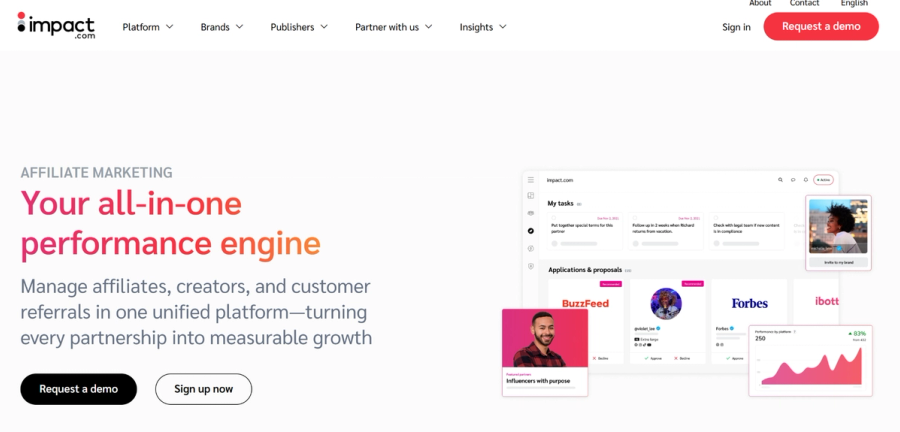
Impact
Founded in 2008 in Santa Barbara, California, Impact set out to modernize affiliate marketing for large, global brands. Instead of acting as a simple network, it positioned itself as a full partnership platform built to manage multiple types of marketing relationships at scale.
Today, Impact is widely seen as a premium solution for enterprise brands. It supports affiliates, influencers, and referral programs in a single interface. That’s a major draw for companies running multi-channel growth strategies.
Rather than a traditional network approach, the platform uses a partnership automation model. Brands manage their own programs, set terms, and control relationships directly. Impact mostly facilitates the connections.
For affiliates, getting started takes some effort. You’ll need approval from Impact itself and then from each brand individually, which makes onboarding slower than open marketplaces like Digistore24.
But Impact does stand out in its flexibility and tracking. It supports both cookie-based and server-to-server tracking for more reliable attribution. However, some users report a clunky interface and inconsistent payment timing, which can be a concern if high cash flow is key to your strategy.
- Price (vendors): Not public; reports suggest ~$500/month for marketplace access
- Commission rates: Brand-set; typically ~5–20%
- Payout speed: Vendor-controlled; mixed reliability reported
- Minimum threshold: ~$10 (autopay)
- Cookie window: Brand-controlled (often ~30 days)
- Refund window: Brand-controlled; commissions lock after validation
CJ Affiliate
CJ Affiliate started in 1998 as Commission Junction in Santa Barbara and has grown into one of the world’s most established affiliate networks. Today, it’s known for its scale and reputation, connecting affiliates with major global brands like LG Electronics, Expedia, and Macy’s for over two decades. Rather than focusing on one niche, it supports partnerships across retail, travel, finance, and tech, reaching massive audiences.
CJ operates as a network facilitator, not a merchant of record. Brands run their own programs, set commissions, and manage approvals, while CJ provides the infrastructure (tracking, reporting, payments, etc.). This gives brands flexibility but means affiliates must work with each advertiser individually.
Getting started is free for affiliates, but not always easy. Affiliates need to apply to each brand, which can slow things down, especially for beginners. Because of this, more experienced publishers and media companies with established traffic may perform better on CJ. Vendors go through a structured onboarding process which can take a few weeks.
Where CJ stands out is in its reporting. The platform offers detailed performance data for scaling campaigns. It also supports server-to-server tracking, though cookies are still the default, with shorter windows (typically 30–45 days). Payouts are usually monthly, which can slow down momentum if cash flow matters.
- Price (vendors): Not publicly listed; must contact sales
- Commission rates: Brand-set; typically ~5–25% (higher in SaaS/finance)
- Payout speed: Monthly; ~Net-20 after month-end
- Minimum threshold: $50 (direct deposit), $100 (check)
- Cookie window: Brand-controlled (usually 30–45 days)
- Refund window: Brand-controlled (typically 30–60 days)

Rakuten Advertising
Rakuten Advertising traces its roots to LinkShare, which was founded in 1996 as one of the earliest affiliate networks. After being acquired by Rakuten in 2005, it evolved into a global platform and was rebranded in 2020 to reflect its role in the marketplace.
Today, Rakuten Advertising is known for working with large, established consumer brands across retail, travel, and services. It has a strong reputation in enterprise ecommerce and is widely used by major publishers and media companies that want access to trusted, high-volume programs.
The platform follows a traditional network model where advertisers manage their own programs, set commission rates, and approve partners, while Rakuten provides the infrastructure for tracking, reporting, and payments. This gives brands full control but requires affiliates to apply to each program individually.
Getting in is possible, but not always quick. Affiliates must be approved by the network and then by each advertiser, creating a moderate barrier to entry. For vendors, onboarding is more involved, with custom contracts handled through a sales team.
Rakuten stands out for its investment in strong retail partnerships. Its Partnership Discovery feature uses AI to help brands find high-performing publishers based on historical data and category fit, streamlining affiliate recruitment. It also connects into Rakuten’s broader ecosystem, including loyalty and cashback programs that can boost conversions.
On the backend, it uses cookies and server-to-server tracking for commissions, plus cross-device attribution built for large-scale retail. That said, some users report payment delays and a clunky interface, which can slow things down.
- Price (vendors): Not public; enterprise contracts via sales
- Commission rates: Advertiser-set; typically ~2–20% (retail)
- Payout speed: Monthly; ~Net-60 (semi-reliable but slower)
- Minimum threshold: Varies by region
- Cookie window: Advertiser-controlled (often ~30 days)
- Refund window: Advertiser validation period before approval
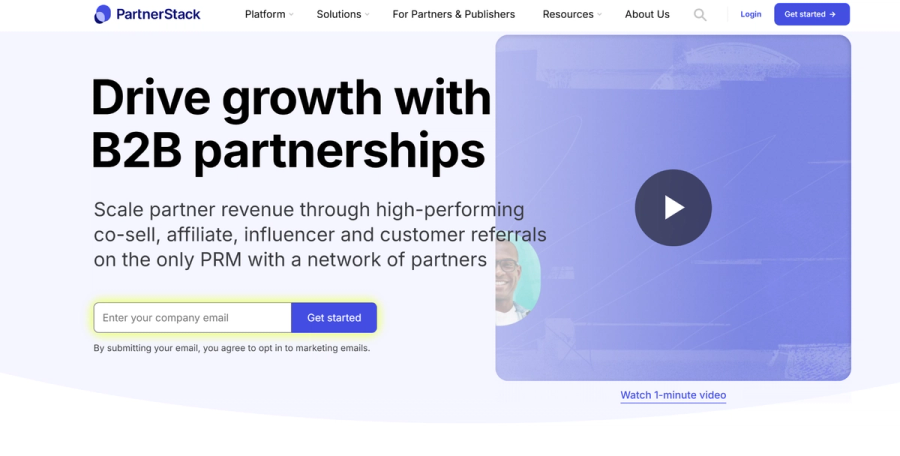
PartnerStack
PartnerStack was founded in 2015 in Toronto, Canada, with a clear focus on B2B SaaS partnerships. Instead of supporting retail or one-time offers, it built its platform around subscription products and long-term partner relationships. Today, over 100,000 partners are active on the platform, which supports well-known SaaS brands like Asana, Webflow, and Monday.com.
The biggest appeal is recurring commissions. If you close a paying customer, you can keep earning as long as they stay subscribed. PartnerStack runs on a SaaS partnership model, not a traditional affiliate network. Companies manage their own programs, set terms, and handle relationships directly, while PartnerStack provides the infrastructure for tracking, onboarding, and payouts.
Affiliates can sign up for free but must apply to individual SaaS programs. Vendors face a higher barrier, with onboarding and pricing tied to being a direct SaaS client rather than a self-serve marketplace.
Tracking is solid, with cookie-based, first-party, and server-to-server options built for subscription products. The main drawback is its high-end positioning. Pricing isn’t public, but reports suggest it can be expensive for vendors. Some users also report lower ROI due to limited support and a higher barrier to entry, making it a tougher platform for beginners to break into.
- Price (vendors): Not public; often ~$500+/month
- Commission rates: Vendor-set; ~15–30%, up to ~40% recurring
- Payout speed: Monthly; reliable but slower than high-frequency platforms
- Minimum threshold: No strict minimum; manual withdrawals
- Cookie window: 90 days
- Refund window: No fixed window; commissions stop if customers churn
FlexOffers
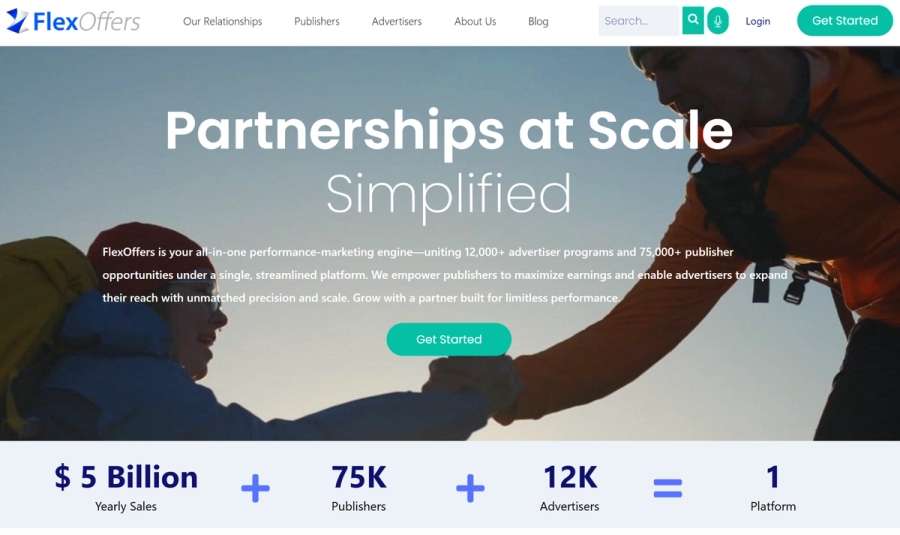
FlexOffers launched in 2008 as a mid-tier alternative to networks like CJ and Awin. Over time, it carved out its own lane.
In one sense, FlexOffers runs on a traditional affiliate network model. Advertisers manage their own programs and set terms, while the platform handles tracking, reporting, and consolidated payouts. What makes FlexOffers different is its aggregation layer. Through API integrations, it pulls in offers from other major networks like CJ Affiliate and Impact, giving publishers access to a wider pool of programs in one place.
Today, it connects over 75,000 publishers with 12,000+ advertisers across a broad mix of industries. For most people, it’s a practical option. It’s not the most premium network, but it’s reliable, flexible, and useful if you want access to many offers without managing multiple platforms.
Affiliates can join with moderate effort and start browsing offers quickly, while vendors go through a standard onboarding process. The platform supports a wide range of niches, including retail, finance, travel, subscriptions, and digital services, making it a solid fit for different content models.
FlexOffers also streamlines execution. FlexLinks automates link creation, while coupon feeds and comparison widgets help publishers build and monetize content faster. Tracking is standard but reliable, using cookie-based attribution and server-to-server methods.
The main user complaints are around delayed payouts or funds being held too long, along with slow or unhelpful support. While much of this is anecdotal, the more practical issue is Net-60 payment terms, which can slow growth for affiliates who rely on faster cash flow.
- Price (vendors): Not publicly listed
- Commission rates: Varies widely (~2–50%)
- Payout speed: Net-30 to Net-60 (some faster options)
- Minimum threshold: ~$50
- Cookie window: Advertiser-controlled (often ~30 days)
- Refund window: Advertiser-controlled (varies by product)

Partnerize
Partnerize was founded in 2010 in the UK, with a focus on giving large brands more control over how they manage partnerships. Its platform offers more automation and customization at scale than traditional networks like Awin. Today, Partnerize works with over 1,800 clients and connects to a large partner base of affiliates and influencers. It’s known as an enterprise-level solution that drives billions in annual transactions.
Partnerize’s main appeal is flexibility. For vendors who want full control, it’s a powerful platform. But for many, that level of depth can feel like overkill.
Partnerize runs on a SaaS model, offering its partner management tools as a subscription (instead of taking a cut of each sale). Unlike traditional networks that act as middlemen, it gives brands the infrastructure to run programs directly. It handles the backend (tracking, reporting, and payments) while brands and partners work together more directly. This can be more cost-effective at scale, but it trades simplicity for control.
It’s important to note that Partnerize is not a plug-and-play option. It is a software meant to help you own your partner program, meaning implementation takes time, and costs can be high for vendors.
Getting started isn’t frictionless. Affiliates can join easily but still need approval from individual brands. Vendors go through a more involved onboarding process, with pricing and setup handled through sales. It’s best suited for large ecommerce, travel, finance, and subscription-based businesses. That said, their customer support is consistently praised compared to platforms like Awin or Clickbank.
Where Partnerize stands out is customization. It supports dynamic commission structures, real-time reporting, and automated workflows from recruitment to payouts. It also recently included enhanced fraud prevention through an integration with BrandVerity. Tracking is strong, with server-to-server and cookieless first-party (pixel-based) options.
- Price (vendors): Custom; often ~$2,000+/month
- Commission rates: Advertiser-set; often ~9–10%
- Payout speed: Flexible; brand-controlled schedules
- Minimum threshold: Not publicly listed
- Cookie window: ~30 days
- Refund window: Brand-controlled (often ~28 days)
Levanta
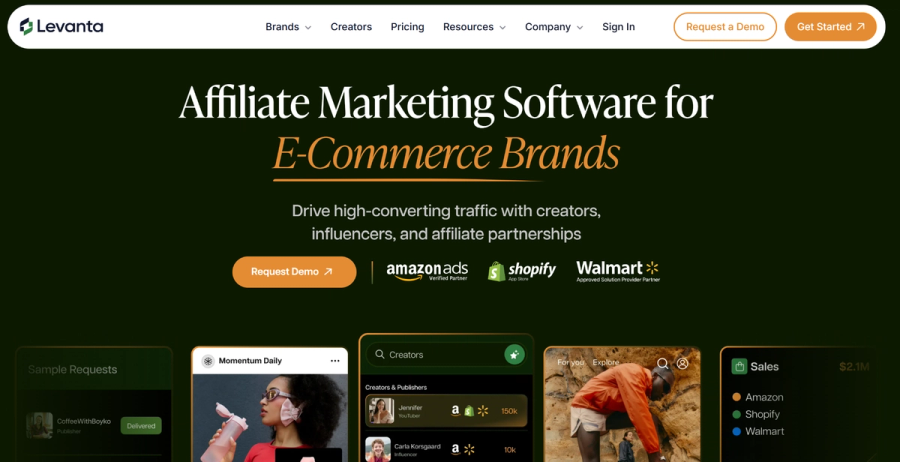
Levanta launched in 2023, built by the team behind Grovia (later acquired by Acceleration Partners). From the start, it focused on a specific gap: helping ecommerce brands run affiliate and creator programs directly on marketplaces like Amazon, Shopify, and Walmart.
While it is certainly the newest network on this list, Levanta is growing fast. The platform now supports thousands of creators and a rising number of ecommerce brands, with a reputation for being creator-first and tightly aligned with modern product discovery.
Levanta uses a hybrid model. Brands run their own programs, while the platform provides creator discovery, tracking, and payouts. It’s neither a traditional affiliate network nor a digital product marketplace. Instead, Levanta sits closer to the ecommerce tech stack, connecting creators directly to physical product sellers on major platforms.
Getting started is easy for creators. Levanta is free to join, and there’s no revenue cut, which makes it attractive for influencers and UGC-style affiliates. For brands, the barrier is higher. You’ll need to integrate with platforms like Amazon or Shopify, which adds setup time but also unlocks deeper tracking and attribution.
Levanta stands out in how it blends affiliate and influencer workflows. It offers an AI-powered creator marketplace, product seeding tools, and campaign management features built for ecommerce teams. Tracking relies on platform-native systems, like Amazon’s Attribution API, with support for cookies in some cases.
- Price (vendors): Custom; mid-tier ~$750/month + 3.5% of sales
- Commission rates: Vendor-set; typically ~20–40%
- Payout speed: Monthly (~30 days)
- Minimum threshold: Brand-controlled
- Cookie window: ~14 days
- Refund window: Not standardized
Final Thoughts
Awin helped shape the affiliate marketing space. A lot of brands still use the platform, and it’s not going anywhere. But that doesn’t make Awin the best option.
You’ve likely noticed the pattern: slow payouts, approval friction, and support that isn’t very supportive. These issues are still common across many affiliate networks (not just Awin). But in 2026, you don’t have to put up with them.
There are platforms built for how affiliate marketing works today — with faster payments, clear tracking, better tools, and support that actually helps you grow.
Digistore24 stands out for a reason. With global reach, faster payouts, a low barrier to entry, and full Merchant of Record support, it removes many of the roadblocks that hold affiliates and vendors back from making meaningful progress.
If you’re looking for a simpler, more scalable way to grow, Digistore24 is worth a closer look.


