

You’ve probably already done the math. Promoting products on Amazon won’t cut it. When commissions are often 1–10%, it takes serious traffic (plus a lot of work hours and budget) to build meaningful income.
That’s why many creators shift to digital products. Courses, software, memberships, and ebooks can sometimes pay 30–70% commissions on certain platforms. That’s money worth working for.
But there comes your next dilemma: choosing the right affiliate network.
Some of the biggest platforms have strict approval barriers. Others seem promising until you notice slow payouts, weak analytics, or low-quality offers. If you’re a new creator trying to grow, these issues can stall your progress.
Plus, sometimes it’s hard to tell what niche the network specializes in. You want solid tracking and fair payouts, but not if it means promoting products that don’t fit your audience or getting stuck with offers that don’t convert.
What you need is a network built for digital products — one that supports courses, software, and online-only items from the start (and gives affiliates the tools to scale).
So we did the boring research for you.
Here are the 7 best affiliate networks for digital products in 2026, ranked by commission potential, usability, and growth opportunities for creators.
Quick List: The 7 Best Affiliate Networks for Digital Products
How To Choose the Right Affiliate Network
Not all affiliate networks are built for the same type of creator. Some specialize in digital courses and software. Others focus on retail products or ongoing partnerships. The best network for you depends on your audience, the type of products you want to promote, and how the platform rewards affiliates.
Here are the main factors to consider when choosing the right network.
1. Check Commission Rates and Earning Potential
Start with the obvious question: How much can you earn per sale?
Compared to physical goods, digital products often pay much higher commissions. Many programs offer 30–70% commissions, and some even go higher for software or subscription services. That’s because digital products have lower production costs and higher margins.
But some merchants offer benefits beyond the headline commission rate. Look for platforms that offer:
- Recurring commissions for subscription products
- Larger payouts for free trials or sign-ups
- Upsell commissions from product funnels
While not available for every product, a network that offers these structures can help you significantly increase your total earnings per customer.
2. Product Quality and Audience Fit
High commissions don’t matter if the product doesn’t convert.
Before joining a network, ask yourself:
- Does this marketplace match my niche?
- Are the products credible and useful?
- Would I actually recommend these products to my audience?
Some networks (even those specializing in digital products) are broad marketplaces, while others specialize in certain industries like SaaS, software, or internet marketing tools. Choosing a platform aligned with your audience makes promotions more effective.
3. Cookie Window
When someone clicks your affiliate link, the network stores a small tracking cookie in their browser for a set period of time. This is called the cookie window, or the attribution window. The cookie tells the system that you referred that visitor, so if they buy within the timeframe that cookie is stored on their device, you earn the commission from that sale.
The length of that window varies widely:
- 24 hours in some retail programs
- 30 days in many standard affiliate programs
- 60–180 days for higher-value digital products or SaaS tools
Many customers don’t purchase immediately after clicking a link. So, if the cookie expires too soon, you lose credit for that referral. A longer cookie window gives buyers more time to decide (and you a better chance of earning the commission).
4. Payout and Reliability
Finally, determine how and when the network pays affiliates.
- How often are payouts issued?
- What is the minimum payout threshold?
- What payment methods are supported?
Reliable networks publish clear payout schedules and have a long track record of paying affiliates on time. Since affiliate marketing is performance-based (meaning you earn commissions only when sales happen) consistent payments are essential to building a sustainable income.
This also matters for scale. Many affiliate marketing models rely on steady cashflow to grow. If you’re stuck waiting for someone to pay you for several weeks before you can invest more in your channel, you can’t scale, which dramatically limits your reach (and earning potential).
The 7 Best Affiliate Networks for Digital Products
1. Digistore24
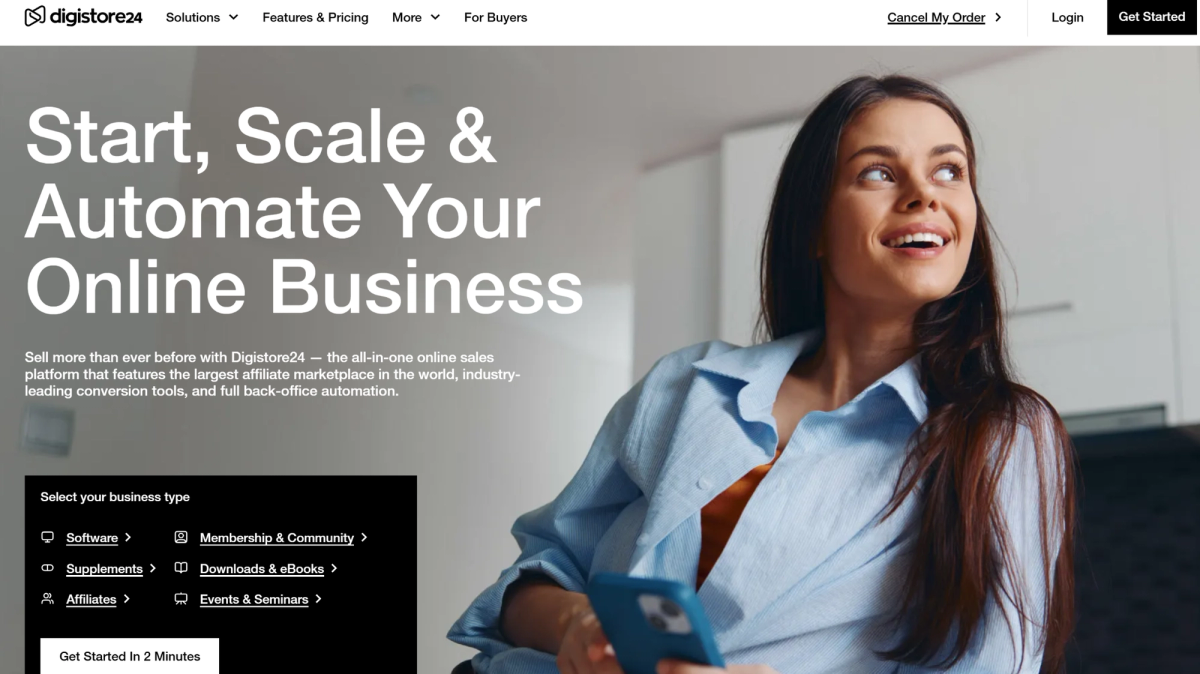
Digistore24 launched in 2012 with a mission to reduce the complexity of managing payments, taxes, and compliance across countries. Unlike most affiliate platforms, Digistore24 acts as the merchant of record, handling payments, tax compliance, invoicing, and refunds so vendors can focus on selling. Digistore24 is also a payment processor, meaning you won’t have to integrate with a separate service.
Today, it’s one of the most established affiliate networks for digital products. The platform hosts thousands of vetted offers across categories like online courses, software, coaching programs, and health supplements. Every product goes through a review process before appearing in the marketplace, which helps filter out low-quality or non-compliant offers.
For affiliates, Digistore24 stands out for its high commission potential and long attribution window. Some offers pay up to 100% commission on free trial conversions, and with a 180-day cookie window, your chances of earning that commission increase.
However, as cookie restrictions tighten with new laws and browser settings, Digistore24 also uses server-to-server (S2S) tracking by default, ensuring more reliable attribution by bypassing browser limitations.
Users report Digistore24 has a reliable payout schedule (up to 4x per month) and a very easy onboarding process, making it popular for creators new to affiliate marketing. With Digistore24, you can build a global marketing strategy without dealing with overseas taxes or red tape.
- Commission rates: Vendor-set; typically 15–90%
- Entry/onboarding difficulty: Easy
- Cookie window: 180 days + S2S tracking
- Refund window: Vendor-defined (typically 60, 90, or 180 days)
- Payout speed: Up to four payout cycles per month (7th, 14th, 21st, and 28th)
- Payment methods: PayPal and SEPA bank transfer
2. JVZoo
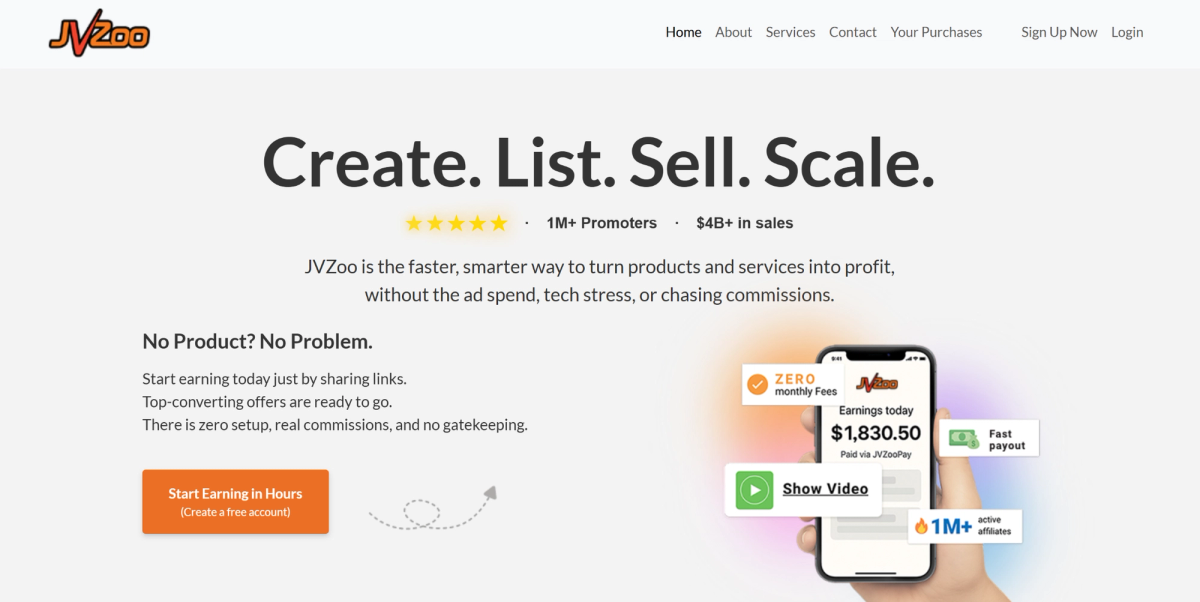
JVZoo launched in 2011 to serve a specific corner of the affiliate world: digital marketing tools and online business products. Instead of trying to cover every industry, the platform focused on offers like software, marketing apps, online courses, and “how to make money online” products.
Today JVZoo hosts thousands of digital offers and has built a large community of affiliates in the marketing and software space. The platform is known for high commissions and simple setup. Vendors can launch products quickly, and affiliates can start promoting almost immediately without a long approval process.
For affiliates, JVZoo’s main draw is commission potential. Many vendors offer 50–100% commissions on front-end products to attract promoters. The platform also provides real-time stats for clicks, conversions, and earnings.
One thing to keep in mind: product vetting is limited, so affiliates usually need to review offers carefully before committing to promoting them.
- Commission rates: Vendor-set; commonly 50–100% on many digital offers
- Entry/onboarding difficulty: Easy (free signup, first payouts may require account verification)
- Cookie window: Browser-dependent; attribution often tied to vendor funnels
- Refund window: Vendor-defined; many offers use 14–30 days
- Payout speed: Weekly payouts once minimum balance is reached; release timing depends on affiliate account tier
- Payment methods: PayPal
3. ClickBank
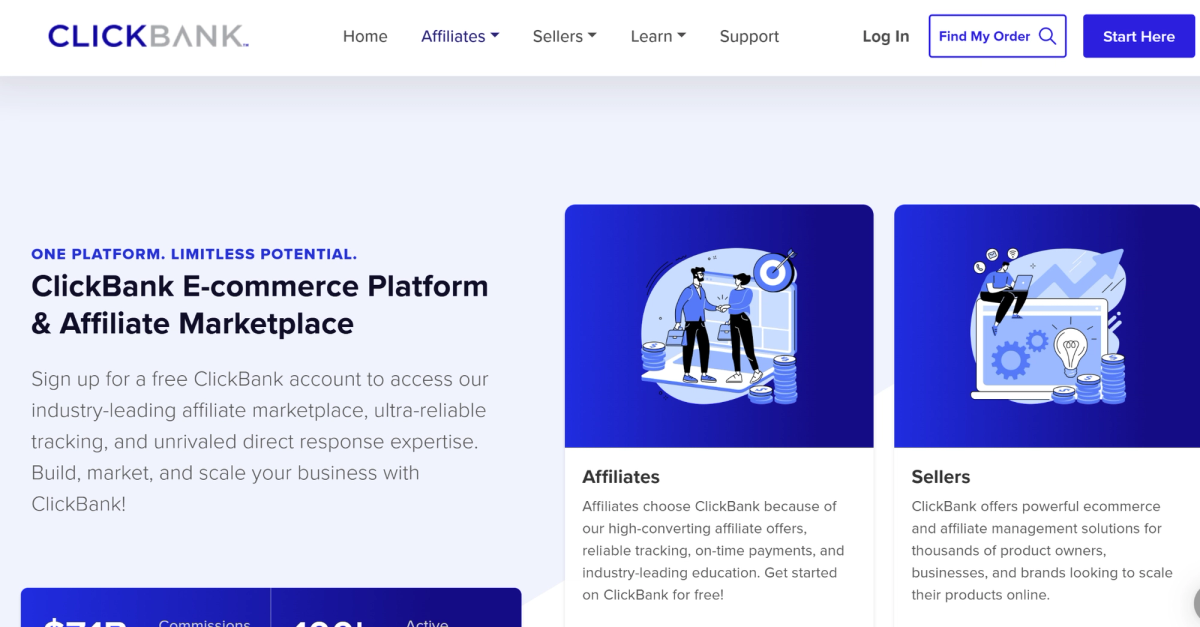
ClickBank started in 1998 when two entrepreneurs built a small payment platform for digital products out of a garage in San Diego. At the time, selling ebooks or online courses on the internet was still new. ClickBank’s idea was simple: create a marketplace where product creators and affiliates could connect without needing their own payment system.
Over the years, it grew into one of the largest affiliate networks in the world. Today, the marketplace includes thousands of offers across categories like health, self-help, business training, and online marketing. Many products are digital (courses, guides, and software) but the platform has also expanded into physical products such as supplements.
For affiliates, ClickBank is extremely easy to enter, and many digital products offer high commissions. The platform also provides simple analytics tools, including the well-known Gravity Score, which shows how many affiliates are successfully selling an offer.
The trade-off comes with product quality, which can vary. Even with the Gravity Score, affiliates usually need to review offers carefully before promoting them, since a refund can sometimes claw back commissions even up to 364 days after a sale.
- Commission rates: Vendor-set; commonly 50–75% on digital products
- Entry/onboarding difficulty: Easy (open marketplace with no approval required)
- Cookie window: 60 days
- Refund window: Vendor-adjustable; default 60 days but can reach 364 days with some restrictions)
- Payout speed and reliability: Weekly or bi-weekly payouts; payments issued after the pay period closes
- Payment methods: Direct deposit (ACH/XACH), wire transfer, or paper check
4. WarriorPlus
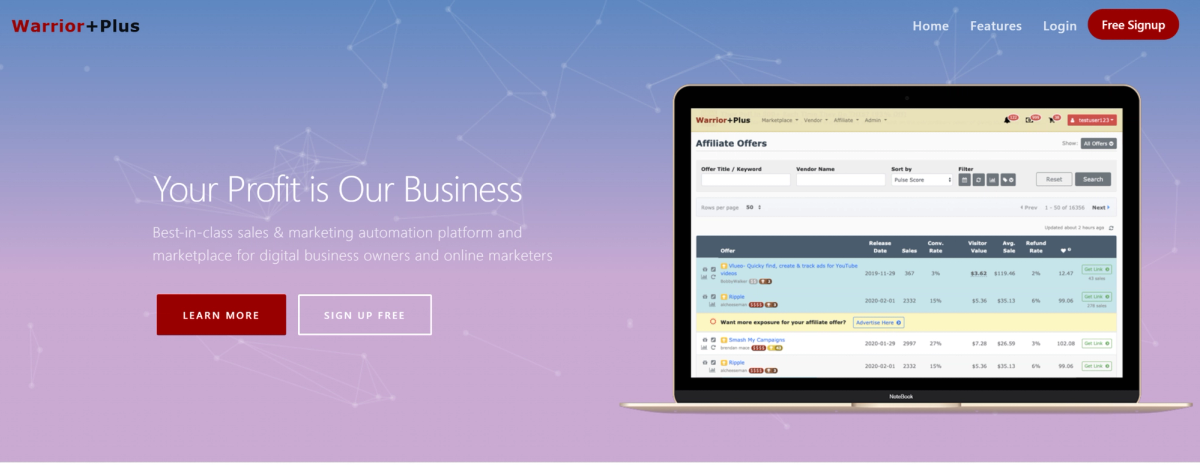
WarriorPlus launched in 2006 to connect vendors selling marketing software, online courses, and infoproducts with affiliates who specialize in promoting them. Over time it’s become a well-known marketplace in the “make-money-online” and digital marketing niches.
For affiliates, WarriorPlus is known for very high commission rates and frequent product launches. Many offers include multiple layers of upsells and funnel products that can increase total earnings per customer. Some vendors even hold promotion contests during initial launch, an intense but highly motivating way to participate.
WarriorPlus also stands out for its advanced tracking. The platform allows you to analyze data on visitor value, conversion rates, and "hops" (clicks) more intuitively than on other platforms.
As with many other platforms, the trade-off is that product quality varies widely. Successful affiliates usually vet offers carefully before promoting them.
- Commission rates: Vendor-set; commonly 50–100% on front-end offers
- Entry/onboarding difficulty: Easy (free account creation; vendor approval required for individual offers)
- Cookie window: Several months (browser-based tracking)
- Refund window: Vendor-defined; commonly around 30 days
- Payout speed and reliability: New affiliates typically start with delayed commissions; trusted affiliates can receive faster payouts or instant PayPal payments depending on vendor settings
- Payment methods: PayPal, Stripe, and bank withdrawal options depending on account configuration
5. PartnerStack
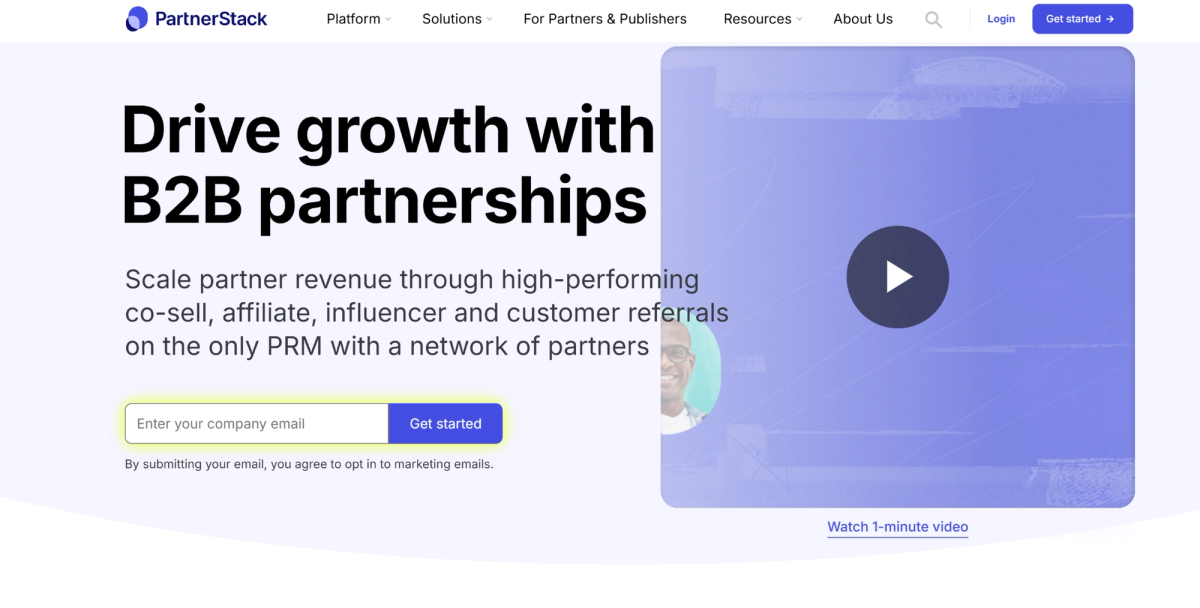
PartnerStack launched in 2015 as GrowSumo, a platform designed to help software companies manage affiliate and referral programs. It later rebranded as the company expanded into a full partnership ecosystem platform for SaaS businesses.
Today the platform connects more than 600 SaaS companies with over 130,000 partners, making it the largest network focused entirely on B2B software partnerships. Instead of digital courses or consumer products, the marketplace centers almost exclusively on SaaS tools like Webflow, Typeform, Semrush, and monday.com. That focus makes PartnerStack especially attractive for affiliates who publish software tutorials, comparison articles, or productivity-tool content.
For affiliates, the biggest advantage is recurring revenue. Many SaaS programs pay a percentage of the customer’s subscription every month, so commissions can continue as long as the user stays subscribed. The platform also tracks partner activity across the funnel (from clicks to sign-ups and revenue) so affiliates can see which partnerships are performing best.
While there is no set refund window, PartnerStack vendors often use a system called “drip commissions” to avoid clawbacks. Instead of paying commissions immediately after a sale, payouts are delayed (usually 30 days, but sometimes 60 or 90 days) to allow time for refunds or customer churn. While this does prevent some tough situations, it can also severely limit cashflow (crucial for some affiliate marketing models).
- Commission rates: Vendor-set; typically 15–50% recurring on SaaS subscriptions
- Entry/onboarding difficulty: Moderate (application required and programs often require approval)
- Cookie window: 90 days
- Refund window: No platform-wide standard
- Payout speed and reliability: Monthly payouts, usually available around the middle of the following month
- Payment methods: PayPal, Stripe, or direct deposit (bank transfer)

6. Avangate
Avangate was founded in 2006 to help software companies sell their products globally without the complexity of payments, taxes, and subscriptions in different countries. Over time, the platform expanded into a full digital commerce system and later merged with 2Checkout, which was acquired by Verifone in 2020. Today the Avangate Affiliate Network still runs as the affiliate side of that system.
The network focuses almost entirely on software, SaaS, and digital services. Affiliates promote products like antivirus tools, productivity apps, VPNs, and developer software from well-known vendors. The marketplace includes tens of thousands of digital products promoted by a global pool of publishers, making it one of the largest affiliate ecosystems built specifically for software.
For affiliates, the main advantage is niche focus. If your audience reads software reviews and tech tutorials, Avangate can be a strong fit. Many programs offer high commissions and recurring payouts on subscriptions. The platform also provides detailed reports on clicks, conversions, and refunds so affiliates can see which offers perform best.
However, Avangate’s tracking may not be as sophisticated as other platforms. Many also complain about the customer service, particularly after the Verifone acquisition. Affiliates have said the onboarding process is strict, with some reporting abruptly closed accounts with no notice.
- Commission rates: Vendor-set; typically 25–75% on software sales
- Entry/onboarding difficulty: Moderate (rigorous application with website review required)
- Cookie window: 180 days
- Refund window: 30 days
- Payout speed and reliability: Monthly/net-20 (minimum payout of $100)
- Payment methods: PayPal, wire transfer, check, or Avengate mastercard
7. Impact
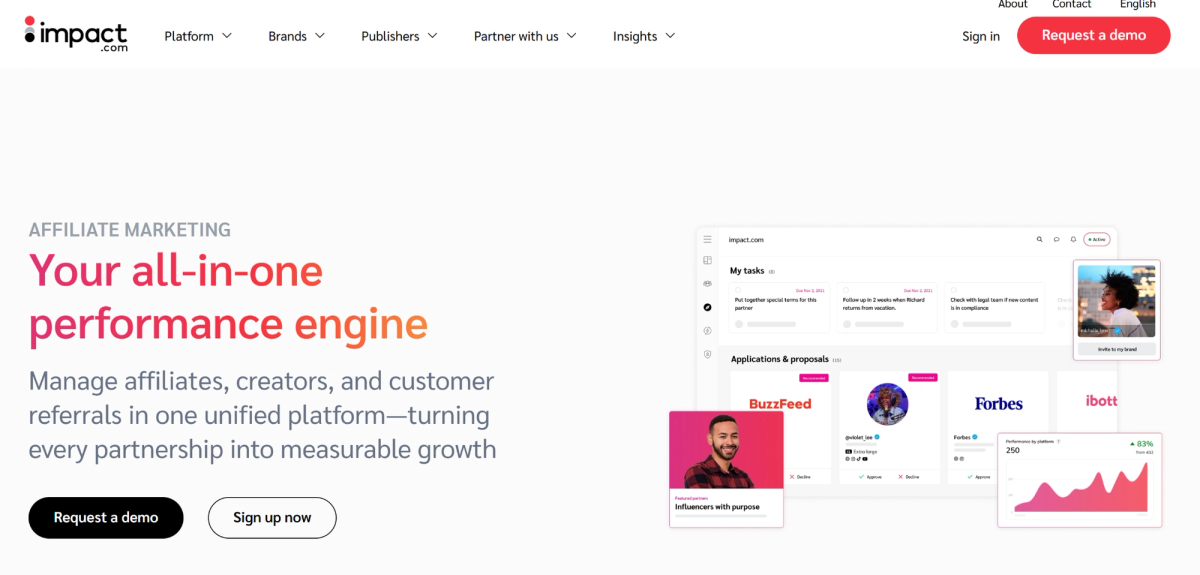
Impact launched in 2008 with a simple goal: give brands and publishers a better way to manage partnerships.
Instead of just running a basic affiliate network, the company built a full partnership platform where brands can manage affiliates, creators, and referral partners in one system. That approach helped Impact attract large brands that want more control over tracking, contracts, and payouts.
Today the Impact marketplace connects thousands of brands with a large global pool of partners. The platform is used by well-known software companies such as Canva, HubSpot, and Envato (plus many physical retailers as well).
For affiliates, Impact’s biggest strengths are its tracking and reporting. The platform uses multiple attribution methods (including cross-device tracking) to measure clicks, conversions, and revenue accurately. The trade-off is that getting started can take longer, since many brands manually review affiliate applications before approving partnerships.
- Commission rates: Brand-set; often 5–20% for retail and higher for digital subscriptions or SaaS referrals
- Entry/onboarding difficulty: Moderate (application required and many brands manually approve partners)
- Cookie window: Cookieless tracking
- Refund window: Brand-defined; typically 30-60 days
- Payout speed: 2-3 weeks (minimum $10 threshold)
- Payment methods: Direct deposit (bank transfer), PayPal, and other regional options depending on partner location
Final Thoughts
If you want to make real money promoting digital products, the affiliate network you choose matters.
Some platforms focus on SaaS partnerships. Others lean toward info products or product launches. Each network in this list serves a slightly different type of affiliate and audience. But a few traits apply across the board:
- Digital products tend to pay more. Many programs offer 30–70% commissions or higher.
- Tracking and payouts matter. Longer cookie windows (or stronger tracking methods) and reliable payments make a real difference over time.
- Better tech saves you time. Platforms that automate the heavy admin work let you focus on what actually grows your income.
Digistore24 is a new kind of affiliate marketing platform.
Built from the start for digital products, Digistore24 makes it easier for vendors and affiliates to work together. Vendors can sell courses, software, memberships (and even health supplements), while the platform handles payments, taxes, and refunds globally. Affiliates get high commissions with a long cookie window and server-to-server tracking, with more frequent payouts to quickly scale any strategy.
Digistore24 handles the complicated parts of affiliate marketing so you can focus on promoting products that matter to your audience.
Ready to get started?