

CJ Affiliate has been around for a long time and helped shape affiliate marketing as we know it today.
But if you’ve ever had a problem on the platform, it’s likely due to this: CJ Affiliate’s customer support is not good.
At times, it feels like a black box. Accounts get flagged or shut down with little warning. Tickets languish with no clear outcome. It’s not just vendors dealing with this, either. Affiliates deal with strict approvals that slow your momentum before you even start.
To be fair, this isn’t just a CJ Affiliate problem. A lot of affiliate networks have the same reputation — slow replies, delayed payouts, limited visibility. For years, that’s just been part of the affiliate marketing game.
But all that’s starting to change.
Serious affiliates and brands want better terms and support, better UX, and faster payouts. And some platforms are finally stepping up. Now, affiliate networks are making it easier to get approved, get paid, and start growing your business.
Of course, not every platform will suit your specific goals. So, we did the research for you.
Here are 9 platforms to consider switching to from CJ Affiliate in 2026.
Quick List: 9 CJ Affiliate Alternatives To Consider in 2026
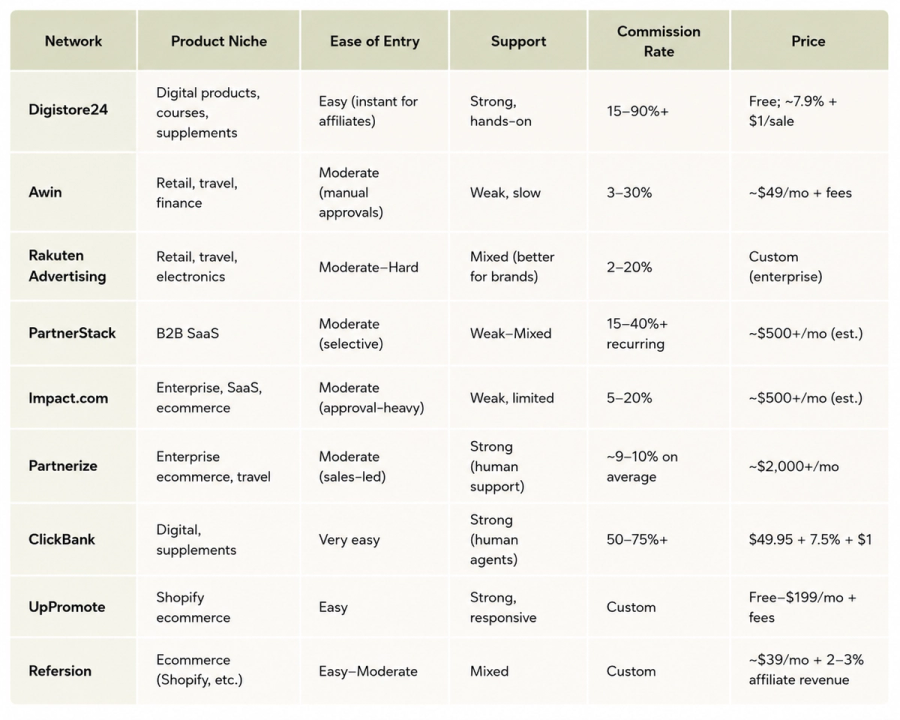
Digistore24
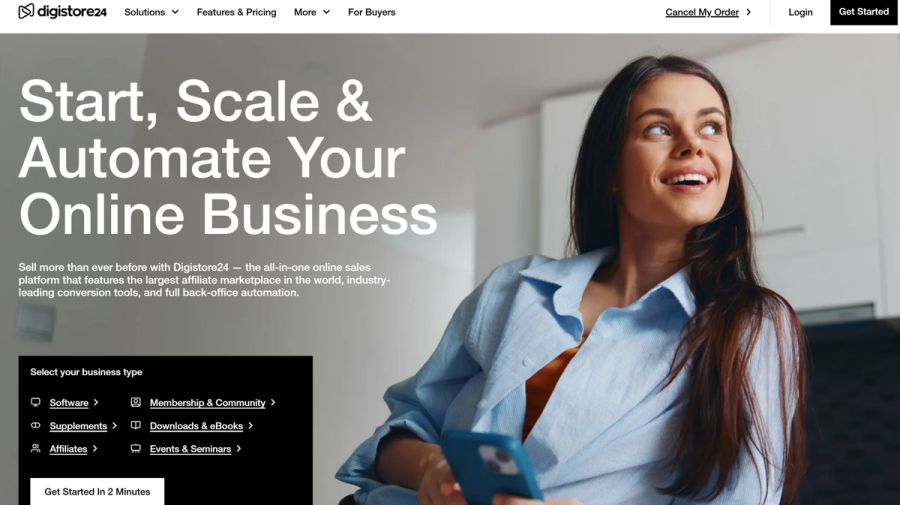
Digistore24 launched in 2012 with a clear goal: make it easy to sell digital products worldwide without getting stuck handling payments, taxes, or compliance. That focus still defines the platform today, as it’s grown into one of the largest digital affiliate marketplaces in Europe. Now, Digistore24 operates globally, with thousands of vetted offers across courses, software, coaching, and even health supplements.
At the core of the platform’s success is its Merchant of Record model. Digistore24 handles transactions, VAT, billing, invoicing, and refunds, meaning the risk and complexity are our burden, not yours.
But what sets Digistore24 apart is how easy it is to use. Affiliates can sign up and start promoting right away. Vendors go through a quick compliance review to ensure quality, but most go live within 48 hours. New users also get hands-on, white-glove onboarding. Once you sign up, a real person reaches out almost immediately to answer questions and help you get started. That level of support is rare in this space.
For tracking, affiliates get a 180-day cookie window, one of the longest in the industry. But where cookies fall short, server-to-server postback tracking runs by default to maintain accurate attribution.
You also get built-in tools to improve conversions, including custom checkout pages, one-click upsells, and split testing. Digistore24’s checkout also supports Apple Pay, Google Pay, and buy-now-pay-later options (like Klarna), reducing friction at the point of purchase and helping you increase conversion rate.
It’s a platform designed to remove friction and help you scale without the usual headaches.
- Price (for Vendors): Free to join; ~7.9% + $1 per sale
- Commission Rates: Typically 15–90%+ (some offers go higher)
- Payout Speed: Weekly (up to 4× per month)
- Minimum Payout Threshold: $50 (first payout), then $200 for subsequent payouts
- Cookie Window: 180 days
Awin
Awin came together in 2017 when two older European networks (Affiliate Window and Zanox) merged — both of which had been around since the early 2000s. Today, Awin is a large, established network that connects brands and publishers.
Unlike Digistore24’s Merchant of Record model, Awin acts as a facilitator. It connects partners and provides tracking, reporting, and payment processing, while brands still run their own programs. That means vendors and affiliates handle their own taxes, refunds, and compliance issues. This setup works well for large companies that want full control, which is why you’ll find major names like Nike, Samsung, and HP on the platform.
The network leans heavily toward retail, travel, and finance offers (not digital products). So, if you’re promoting physical products or consumer services, Awin gives you a lot to work with. But getting started takes effort. Affiliates go through a manual approval process, but still need to apply to each individual brand. Vendors also face a more involved approval process to launch programs.
On the tech side, Awin is solid. It combines cookie tracking with server-to-server tracking and includes features like “bounceless tracking” to improve link performance and SEO. There are also tools to help brands find partners and help affiliates recover lost conversion attributions.
Where Awin struggles is the day-to-day experience. Support is often described as slow or hard to reach. Payments are scheduled twice a month, but delays and “uncleared” commissions are common complaints.
- Price (for Vendors): From ~$49/month + setup fee + ~3.5% tracking fee
- Commission Rates: Typically 3–30% (set by brands)
- Payout Speed: Twice monthly (1st and 15th), but can be delayed
- Minimum Payout Threshold: $20
- Cookie Window: Usually 30–90 days (set by advertiser)
Rakuten Advertising
Rakuten Advertising has been in the affiliate game longer than most. It started as LinkShare in 1996, one of the first affiliate networks, and later became part of the Rakuten Group. Today, it’s positioned as a global marketing platform built for large brands.
The network itself is smaller than some competitors, but more curated. It connects around 1,000 major brand programs with a large base of publishers.
Like other traditional affiliate networks, Rakuten acts as the middle layer. It handles tracking, reporting, and payments, while brands run their own programs. It’s also similar to Amazon Affiliates in that it connects to a large marketplace (Rakuten.com). That allows users to tap into its broader ecosystem, including loyalty and cashback programs, which can help drive conversions.
You’ll find fewer digital products on Rakuten, but strong coverage in physical goods and consumer services. That setup attracts well-established companies in retail, travel, and electronics, especially those already selling on the platform. Rakuten also includes AI tools to help match affiliates and brands based on customer data.
Getting started is similar to Awin. Affiliates go through an approval process, then apply to each advertiser. Vendors typically go through sales conversations to set up a custom contract, which can slow onboarding. Support is generally better at the enterprise level, though affiliates report a mixed experience.
Rakuten payments are reliable, but slow, often on Net-60 terms. Tracking is solid, combining cookies with server-to-server methods and even supporting cross-device attribution.
- Price (for Vendors): Custom (enterprise contracts)
- Commission Rates: Typically 2–20% (set by advertisers)
- Payout Speed: Monthly (Net-60)
- Minimum Payout Threshold: Varies by region
- Cookie Window: ~30 days (set by advertiser)
PartnerStack
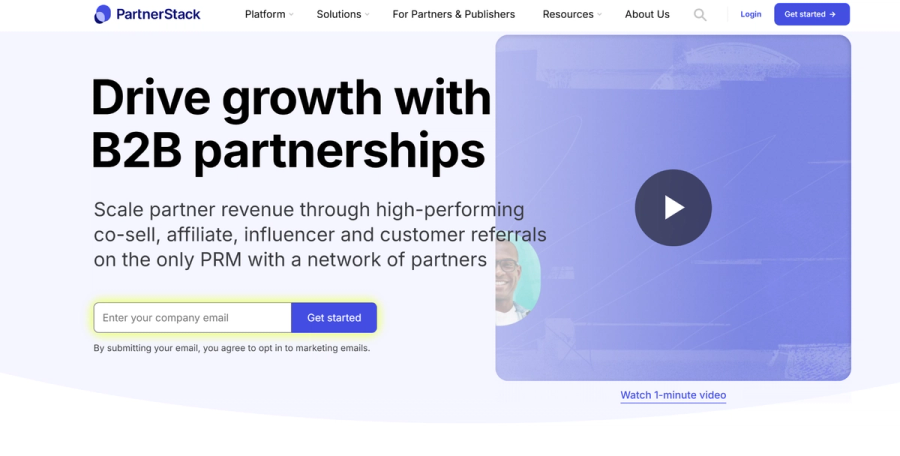
PartnerStack launched in 2015 and is designed almost entirely for B2B SaaS partnerships, including affiliates and influencer deals. Instead of acting like an open marketplace, PartnerStack gives companies the tools to run their own partner programs while handling tracking, onboarding, and payouts behind the scenes. It’s widely used by tech brands like Asana, Webflow, and Monday.com, and has supported over 100,000 partners.
PartnerStack is built for long-term value. Many programs offer recurring commissions, so affiliates can earn monthly as long as a customer stays subscribed. That’s a big shift from one-time payouts and can add up fast with the right audience.
But it’s not the easiest place to get started. PartnerStack’s affiliates still need to apply to each program, and many brands have selective approval criteria. Vendors also face a higher barrier, since the platform is tailored to SaaS companies with more structured partner strategies.
Tracking is strong and built for subscriptions, with support for cookies, first-party data, and server-to-server methods. The system is designed to handle longer sales cycles and repeat billing.
However, PartnerStack’s poor support is a common complaint. Many users report slow responses or limited help when issues arise. Payouts are reliable, but run on a monthly cycle, which can make it harder to scale certain strategies.
- Price (for Vendors): Estimated ~$500+/month + potential revenue share
- Commission Rates: Typically 15–30% (some recurring up to ~40%)
- Payout Speed: Monthly
- Minimum Payout Threshold: No strict minimum (manual withdrawal)
- Cookie Window: 90 days
Impact
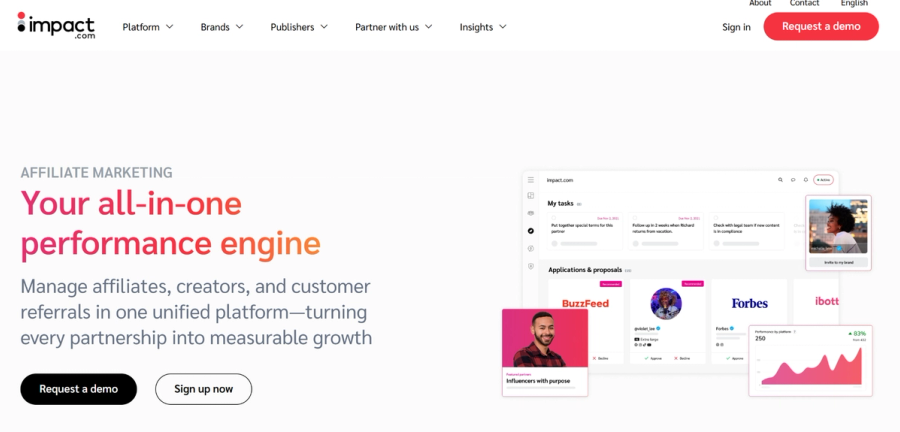
Starting in 2008, Impact.com was built for brands that want to manage all types of partnerships in one place (affiliates, influencers, B2B deals, and more).
Today, Impact supports hundreds of thousands of active partnerships and is used by major companies like Walmart, Uber, and Shopify. It’s a strong fit for enterprise ecommerce, SaaS, and finance brands that need structure and detailed reporting across multiple channels.
But that structure comes with a few tradeoffs.
Getting started with Impact isn’t instant. Affiliates have to be approved by the platform, then apply to each brand individually. Since it's designed for scale over speed, vendors go through a full onboarding process with the Impact team.
Support is another common pain point. Many users report slow responses or limited help, with heavy reliance on AI chatbots instead of real people. Payouts can also vary by brand, which adds another layer of inconsistency. That said, Impact uses a mix of cookie and server-to-server tracking to improve attribution accuracy.
Impact works best if you already have traction and want enterprise-level control. But if you’re looking for speed, flexibility, or hands-on support, it can feel heavy.
- Price (for Vendors): Starts around $500/month (lower-tier tracking plans from ~$30/month)
- Commission Rates: Typically 5–20% (set by brands)
- Payout Speed: Flexible, but often inconsistent depending on advertiser
- Minimum Payout Threshold: ~$10 (autopay)
- Cookie Window: Usually ~30 days (set by advertisers)
Partnerize
Partnerize was founded in 2010 in the UK. Over time, it’s grown into a high-end platform used by large companies to run affiliate and partner programs at scale.
Unlike traditional networks, Partnerize doesn’t just act as a middle layer. It gives brands the tools to build and manage their own programs directly, with full control over partners, commissions, and workflows. That makes it a strong fit for enterprise ecommerce, travel, and finance companies that need structure but still want flexibility in how they run their programs.
Parternize has built a solid reputation, especially among larger brands. It works with over 1,800 clients and is often praised for its support, which is rare in the affiliate marketing world. The team is known for being responsive and hands-on, especially during onboarding and ongoing program management.
Getting started on Partnerize still takes a bit of time. Affiliates can join the platform very easily, but must apply to each brand individually. Vendors go through a more involved, sales-led setup process, which can slow things down compared to self-serve options. Some vendors also report that their costs are very high.
On the technical side, Partnerize is strong. It supports server-to-server and first-party tracking, which helps maintain attribution as cookies become less reliable. It also automates key workflows, from recruiting partners to handling payouts. For example, Partnerize can automatically help users find and invite affiliates or influencers while also providing real-time reporting and built-in fraud prevention.
- Price (for Vendors): Custom pricing (often ~$2,000+/month)
- Commission Rates: ~9–10% on average (set by advertisers)
- Payout Speed: Flexible (controlled by advertiser)
- Minimum Payout Threshold: Not publicly listed
- Cookie Window: ~30 days
ClickBank
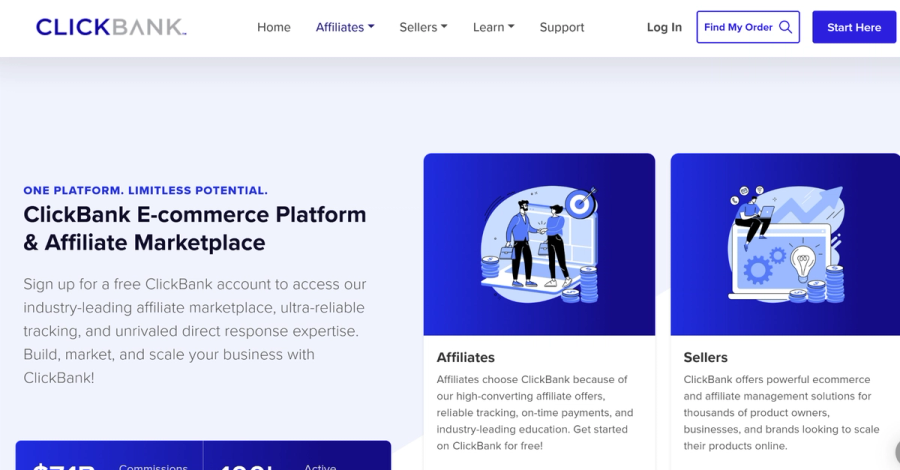
ClickBank has been around since 1998, making it one of the earliest players in affiliate marketing. It helped define the digital product space long before most modern platforms launched.
Today, ClickBank still operates as a large global marketplace focused on digital products like courses, ebooks, and software, along with some physical supplements. Similar to Digistore24, ClickBank also acts as a Merchant of Record, so it handles payments, billing, taxes, and refunds for vendors. That takes a lot of complexity off your plate, especially if you’re selling globally. Clickbank’s support is also solid, which is especially rare for an affiliate marketing network of this size.
Getting started on Clickbank is simple. Affiliates can sign up and promote products right away with no approval process. Vendors can also launch especially quickly (with a one-time activation fee), since the platform manages the backend infrastructure. That ease of access is a big reason why ClickBank has over 100,000 active affiliates and several active vendors.
The tradeoff is quality control. The open marketplace makes it easy to find offers, but it also means product quality can vary. Some niches have strong products, while other parts of ClickBank are known for hype-driven, low-quality offers and aggressive marketing.
Sales tracking is mostly cookie-based, with server-to-server tracking added more recently as an option. However, Clickbank’s “Gravity Score” is a powerful metric for affiliates that shows how well a product is converting based on recent affiliate performance. It’s a quick way to spot what’s working and what isn’t.
Payouts are frequent, but there’s a catch: ClickBank holds back a portion of your commissions for up to 180 days for refunds (which can actually occur up to 364 days after purchase in some cases).
- Price (for Vendors): $49.95 activation fee + ~7.5% + $1 per sale
- Commission Rates: Typically 50–75%+
- Payout Speed: Weekly or bi-weekly (with reserve hold)
- Minimum Payout Threshold: ~$10
- Cookie Window: ~60 days
UpPromote
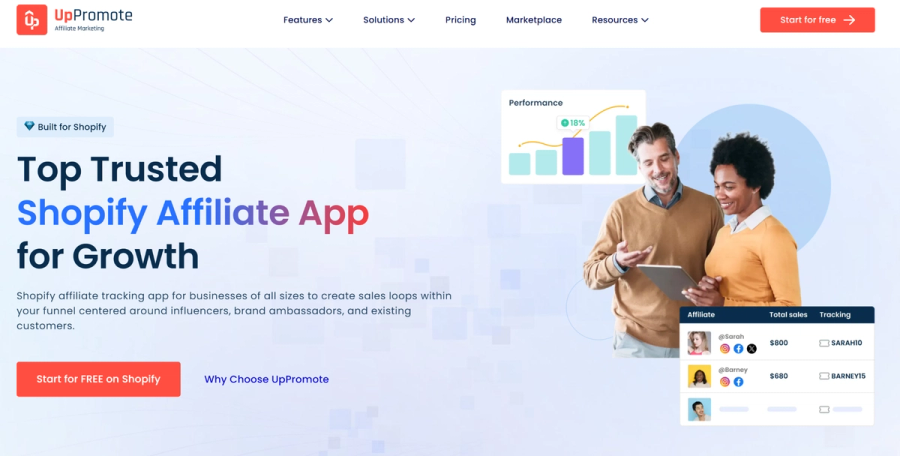
UpPromote started as a simple Shopify app to help e-commerce stores launch and run affiliate programs without a full enterprise setup. Today, it’s still tightly connected to Shopify, making it easy for DTC brands to get started.
You can install UpPromote, set commissions, and launch a new program quickly. That ease of use has helped it grow to over 100,000 users worldwide, mostly small to mid-sized stores, creators, and influencer-driven brands.
For affiliates, using UpPromote is straightforward. Many programs offer quick approval, and some are automatic. Promotion is flexible, with options like referral links and coupon codes. That can make it a good fit for influencers and content creators who want multiple conversion paths.
Tracking on UpPromote is more advanced than you’d expect from a Shopify app. It combines cookies, coupon attribution, and lifetime tracking, so affiliates can earn on repeat purchases. It also supports subscriptions and optional server-to-server integrations, adding flexibility without making the platform too complex.
Support is one of UpPromote’s strongest points. Users consistently highlight fast, helpful responses, especially compared to larger networks. That said, UpPromote isn’t built for large enterprise programs. The focus is on simplicity, automation, and control for growing ecommerce brands that want to move fast.
- Price (for Vendors): Free plan available; paid plans up to ~$199.99/month + performance fees
- Commission Rates: Fully customizable (percentage, flat, or tiered)
- Payout Speed: Set by merchant (manual or automated)
- Minimum Payout Threshold: Configurable by merchant
- Cookie Window: Fully customizable (up to very long durations)
Refersion
Refersion launched in 2013 and grew alongside the rise of Shopify and direct-to-consumer brands. Today, it supports tens of thousands of merchants and millions of affiliates, tracking billions in affiliate-driven revenue.
Refersion’s focus is squarely on e-commerce. It works best for brands selling physical products through platforms like Shopify, WooCommerce, or BigCommerce. Ultimately, it’s more structured than simple Shopify apps, but not as heavy as enterprise platforms. That makes it a solid option for growing e-commerce brands that want more control without complexity.
Getting started on Refersion is fairly simple. Merchants can plug it into their store and launch a program quickly. Affiliates usually apply to individual brands through the marketplace, so access is easy but still controlled by each vendor.
Tracking is built around first-party data and referral links, but Refersion also supports coupon tracking and product-level commissions, giving brands more control over how they reward partners. Commissions can be customized by product, campaign, or customer type. But in all cases, payouts are consistent, with options for automated and bulk payments.
Within the Refersion dashboard, you’ll also find tools to grow your program, like post-purchase signup prompts and branded affiliate portals.
- Price (for Vendors): Starts at ~$39/month + ~2–3% of affiliate revenue (free plan limited)
- Commission Rates: Fully customizable (percentage, flat, SKU-based, or subscription)
- Payout Speed: Typically monthly (automated or manual options)
- Minimum Payout Threshold: Set by the merchant
- Cookie Window: Configurable by merchant
Final Thoughts
CJ Affiliate helped build the affiliate marketing world. But today, there are better options. The hard part isn’t finding alternatives, but choosing the right one for your goals.
Here’s a simple way to think about it:
- Selling digital products? Look for high commissions and built-in checkout tools
- Just getting started? Prioritize easy entry and fast payouts
- Tired of roadblocks? Choose a platform with strong support
Each platform has its place, and most come with tradeoffs. But for many users, Digistore24 strikes just the right balance.
In addition to high commissions, Digistore24 removes a lot of the friction that slows early momentum. You can start quickly (with full onboarding support), get paid fast, and scale your strategy without dealing with payment and tax issues or sketchy products.
Want to build a lasting business strategy in a short time? Digistore24 is one of the strongest CJ Affiliate alternatives available today.


